
marriage_ring

Maximising Tax Efficiency Through the Marriage Allowance

The Marriage Allowance presents a valuable tax-planning opportunity for eligible couples. This mechanism permits the lower-earning spouse or civil partner to transfer £1,260 of their personal tax-free allowance to the higher-earning partner.

For the current 2026/27 tax year, the standard Personal Allowance remains capped at £12,570. Utilising this election can directly reduce the higher earners annual tax liability by up to £252.

Strategic Eligibility Criteria

To secure a net tax saving for the household, the couple’s income profiles must meet specific thresholds:

  • Transferor Profile: The lower-earning partner must typically have a gross income below the £12,570 Personal Allowance.
  • Recipient Profile: The higher-earning partner must be a basic-rate taxpayer.
  • Income Band: In England, Wales, and Northern Ireland, the recipient’s income must sit between £12,571 and £50,270.
  • Regional Variations: Different basic-rate thresholds apply for residents in Scotland.

Practical Impact on the Household

Electing to transfer the allowance will alter both individual tax positions. While the lower earner may incur a small tax charge if their income slightly exceeds their remaining allowance, the net consolidated tax position for the couple remains positive.

Consider a scenario where Partner A earns £11,500 and Partner B earns £20,000:

  • Partner A transfers £1,260 of their allowance to Partner B.
  • Partner B’s taxable exposure drops significantly.
  • The net household cash benefit results in an immediate £214 saving.

Implementation and Backdating

Claims can be backdated to include any eligible tax year from 6 April 2022 onward, allowing couples to recover unclaimed relief from prior periods. Once the election is approved by HMRC, the transfer remains in force automatically for subsequent tax years. It will only cease if formally cancelled or if a change in income levels alters your eligibility status.

spring_statement_2025

Spring Statement 2025: Key Announcements and Economic Outlook

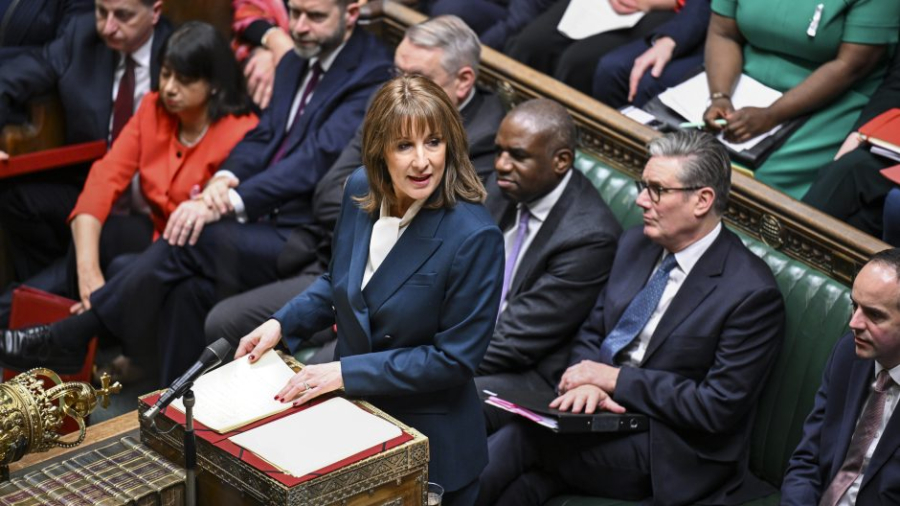
Chancellor Rachel Reeves delivered the UK Government’s Spring Statement 2025 on 26 March, outlining updated economic forecasts, spending plans, and policy reforms aimed at strengthening public finances while supporting long-term growth.

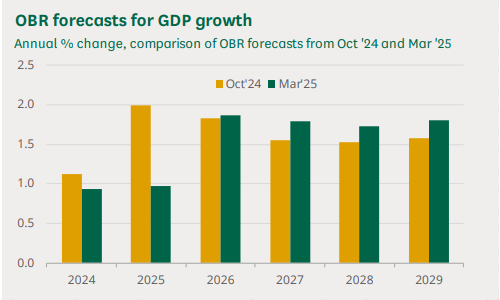
According to the Office for Budget Responsibility (OBR), UK economic growth for 2025 has been revised down from 2.0% to 1.0%, reflecting ongoing global uncertainty, rising inflation pressures, and weaker business investment. However, growth forecasts for later years have been slightly improved, supported by lower energy prices, planning reforms, and increased construction activity.

The Spring Statement focuses heavily on maintaining the Government’s fiscal rules. To achieve this, the Chancellor announced a combination of spending adjustments, welfare reforms, defence investment, and measures to reduce tax avoidance.

Key Measures Announced

Welfare Reforms

The Government announced significant changes to welfare spending, including reforms to disability-related benefits and Universal Credit. These measures are expected to reduce welfare spending by around £4.8 billion by 2029/30, while increasing support for employment-focused programmes.

Increased Defence Spending

An additional £2.2 billion will be allocated to defence in 2025/26 as part of the Government’s commitment to increase defence spending to 2.5% of GDP by 2027. Funding will partly come from reductions in overseas aid spending.

Housing and Construction Investment

The Spring Statement includes:

  • £2 billion for new social and affordable housing projects
  • £625 million investment in construction skills and workforce training
  • Support for planning reforms designed to boost housebuilding and infrastructure development

Tackling Tax Avoidance

The Government also announced measures to close the tax gap through increased HMRC enforcement, stronger debt recovery systems, and higher penalties for late tax payments. These measures are expected to raise up to £1 billion annually by the end of the forecast period.

Economic Outlook

The OBR forecasts inflation to peak at 3.8% during 2025 before gradually returning to the Bank of England’s 2% target in 2026. Unemployment is expected to rise slightly to 4.5% before easing in later years.

Despite economic pressures, the Government says the Spring Statement aims to balance fiscal responsibility with investment in defence, housing, public services, and long-term economic growth.

The next major fiscal event will be the Government’s Spending Review, expected in June 2025, which will provide further detail on departmental budgets and future public spending plans.

UK economic growth forecast for 2025 has been revised from 2.0% to 1.0%, according to the OBR
UK economic growth forecast for 2025 has been revised from 2.0% to 1.0%, according to the OBR;

Source: OBR, Economic and fiscal outlook – March 2025, 26 March 2025, Table A.1

woman_with_car

Reclaiming VAT on car leasing costs

VAT Recovery on Commercial Vehicle Leases

Businesses leasing passenger vehicles frequently misunderstand the compliance rules regarding Value Added Tax (VAT) reclamation. HM Revenue and Customs (HMRC) enforces strict limitations rather than allowing full recovery.

The 50% Standard Restriction

For standard commercial car leases, HMRC restricts VAT recovery to 50% of the leasing charges. This block accounts for anticipated private vehicle use, even if the car is deployed primarily for corporate operations.

Key Industry Exemptions

The 50% restriction does not apply to specific commercial activities where the vehicle functions strictly as a revenue-generating asset. Qualifying businesses can achieve 100% VAT recovery if the leased vehicle is used as:

  • Taxis or private hire vehicles
  • Driving instruction vehicles
  • Self-drive hire fleet stock

Short-Term Fleet Hire Rules

The 50% restriction routinely applies to short-term vehicle rentals and temporary breakdown replacements. However, a crucial exemption exists for temporary hires:

  • Duration: The rental period must not exceed 10 consecutive days.
  • Usage: The vehicle must be deployed 100% exclusively for business purposes.

Compliance and Risk Mitigation

Overlooking these nuances—particularly during ad hoc or temporary vehicle hires—presents a significant compliance risk. Assuming that partial business use justifies full VAT recovery can lead to retroactive penalties and assessments during an HMRC audit.

man_filling_hmrc_form

Do you need to register for self-assessment?

Whether you are required to register for Self Assessment depends on your income sources and personal circumstances. This may apply even where most or all of your income has already been taxed through PAYE.

You will generally need to submit a Self Assessment tax return if you are self- employed as a sole trader and your gross trading income exceeds £1,000 before expenses. Individuals who are members of a business partnership are also normally required to file a tax return.

A Self Assessment return may also be required where total taxable income exceeds £150,000 for the 2026/27 tax year. However, individuals with lower levels of income may still fall within Self Assessment depending on their circumstances. This commonly applies where there are additional untaxed income sources, such as:

  • Rental Income;
  • Foreign Income;
  • Savings or Investment Income; or
  • Dividend Income.

Other common reasons for filing a tax return include:

  • Reporting and paying Capital Gains Tax following the disposal of assets; or
  • Being liable to the High Income Child Benefit Charge.

Although certain smaller amounts of income from activities such as online selling or property income may be covered by available allowances, it is important to review the position carefully.

If you are required to file a tax return for the first time, you must generally notify HMRC by 5 October following the end of the relevant tax year. For the 2026/27 tax year ending on 5 April 2027, the registration deadline will usually be 5 October 2027.

2025_Autumn_Budget_Statement-940x529

The 2025 Autumn Budget: What’s Changing and What It Means for You

The UK Government has just announced its 2025 Autumn Budget, outlining how its policies will impact the economy and households across the country. By staying informed about what’s new and what remains the same, you can make well-informed decisions about your financial future.

We’ve broken down the key points below, so you can focus on what matters most to you.

Seeking Professional Advice

Tax treatment depends on individual circumstances and may change in the future. If you’re unsure about how any Budget changes may affect you personally, you may wish to seek advice from a qualified financial adviser or tax professional.


ISA Allowances and Tax

Tax rules and allowances are subject to change, and the value of any tax benefits will depend on individual circumstances.

ISA Allowances

What’s Changing?

The Government has announced that the annual Cash ISA allowance for individuals under the age of 65 will reduce to £12,000 from April 2027.

However, the overall ISA subscription allowance will remain at £20,000, with confirmation that this limit will stay in place until at least the 2030/31 tax year.

What Could This Mean for You?

  • Individuals may wish to maximise current ISA allowances ahead of the changes taking effect in 2027.
  • For long-term financial goals, some savers may also wish to review whether a Stocks & Shares ISA could offer greater growth potential compared to cash savings, particularly in light of the lower Cash ISA cap.

Income Tax

What’s Changing?

The freeze on income tax thresholds has been extended through to April 2031. In addition, property income tax will increase by 2% across all tax bands from April 2027.

What Could This Mean for You?

  • Factor any threshold freezes into your future budgeting, as more of your income may become taxable.
  • For landlords or property investors, re-evaluate rental yield and return assumptions under the new levy regime.
  • Consider alternative investments other than Buy to Let.

Dividend Tax

What’s Changing?

Dividend tax rates are increasing: both the basic and higher-rate bands for dividend tax will see a 2% increase from April 2026: the new rates will be 10.75% (basic) and
35.75% (higher rate).

Additional rate remains unchanged. This makes dividend-income outside tax-efficient wrappers more costly.

What Could This Mean for You?

  • Review how much of your dividend income sits outside tax-efficient accounts. Making sure to maximize your ISA allowances or alternative wrappers.
  • As part of your longer-term investment planning, adjust return expectations to account for higher dividend tax drag.
  • Self-employed or company directors may want to review how income is extracted from their business.

Stamp duty and property-related taxes

What’s Changing?

A new “high-value property surcharge” will apply to homes valued at £2 million or more, starting April 2028. This will rise to £7,500 per year for properties valued above £5 million. Standard stamp duty and property taxes remain in place.

What Could This Mean for You?

If you own – or plan to buy – a property over £2 million, factor in the potential future surcharge when doing cashflow and long-term wealth planning.


Pensions and salary sacrifice

What’s Changing?

From April 2029, salary-sacrifice pension contributions above £2,000 per year will no longer be exempt from National Insurance Contributions (NICs).

What Could This Mean for You?

  • Review your overall pension planning strategy, taking into account the potential increase in the cost of funding your retirement.
  • Salary sacrifice will remain useful, but above £2,000 it loses NI advantage post-2029.
  • Recalculate long-term retirement savings projections under the new rules to evaluate whether contribution levels need adjusting.


Please note: The above is a summary of some of the changes, to see a complete list of the Budget changes, please visit the official Government website. If you’re unsure about how any Budget changes may affect you personally, you may wish to seek advice from a qualified financial adviser or tax professional.

student-849825_1280

Businesses say hybrid working is here to stay

Less than 30% of firms expect their workforce to fully return to the workplace over the next five years, according to research by the British Chambers of Commerce (BCC).

The survey of over 1,000 businesses found just 27% of respondents predict their employees will be fully physically present in the workplace over the next five years. In addition, 47% anticipate their staff will be mostly in-person, 16% expect mostly remote and 8% fully remote.

The research found a clear divide between different sectors. Only 17% of B2B services organisations expect fully in-person working, while the figure for manufacturers is 38% and B2C services 37%.

Jane Gratton, Deputy Director of Public Policy at the BCC, said:

’Our data shows that hybrid working is now part of the fabric of the modern workplace. This flexibility is valued by employers and their teams. Less than 30% of firms expect staff to be working fully in-person over the next five years.

’Flexible working makes good business sense. In a tight labour market where employers are competing for skilled workers, hybrid working and flexible working more generally have become important parts of staff benefit packages.’

Reference: BCC website

startup-594090_1280

Chancellor makes Full Expensing permanent in Autumn Statement

Chancellor Jeremy Hunt used his Autumn Statement to make Full Expensing permanent for those businesses investing in IT equipment, plant and machinery.

The Chancellor said he was aiming to stimulate economic growth and highlighted 110 measures for businesses in the Statement.

Full Expensing was first announced in the March Budget and was scheduled to last for three years. The rules allow a 100% write-off on qualifying expenditure on most plant and machinery (excluding cars) as long as it is unused and not second-hand.

Mr Hunt has now made it permanent and said it represents the ’largest business tax cut in modern British history’, worth £11 billion per annum.

The Chancellor also extended the tax reliefs and incentives for Freeports and the Investment Zones programme from five to ten years. In addition, he announced three advanced manufacturing Investment Zones, which will be established in Greater Manchester, the East Midlands and the West Midlands.

There is also a business rates support package worth £4.3 billion over the next five years to help high streets and protect small businesses. This includes a rollover of the 75% retail, hospitality and leisure relief.

Rain Newton-Smith, Chief Executive of the Confederation of British Industry (CBI), said:

Making full capital expensing a permanent feature of the tax system can be transformational for accelerating growth and improving living standards in the long-term. Helping firms to unleash pent-up investment is critical to getting momentum into the economy.

Reference: GOV.UK CBI website

retiree-7390179_1280

Pension Reforms: Three vital actions for Business Owners

The UK has reached a significant turning point with recent pension reforms. For business owners, staying on top of these changes is not just a matter of compliance, but also an opportunity to enhance the financial well-being of businesses and employees. In this article, we cover off the key aspects of the UK pension reforms and how they may impact your business.

The UK pension system has undergone several reforms aimed at making retirement savings more robust and secure for employees. As reported on the ICAEW Website, the introduction of auto-enrolment, changes in tax relief structures, and adjustments to the pensionable age are among the most notable shifts. These reforms are designed to encourage a culture of saving and ensure a more financially secure retirement for workers.

Proposed changes would see the pension landscape consolidated into fewer schemes, with the aim of ensuring the schemes themselves are run more efficiently, delivering a more cost-effective pension to businesses and employees.

Compliance and Contributions:

As a business owner, it’s crucial to understand your role in auto-enrolment and the minimum contribution requirements. Failure to comply can lead to penalties, but more importantly, it’s about supporting your employees’ future.

Tax Implications of Pension Reforms

Changes in tax relief on pensions can affect both your business finances and your personal retirement planning. Staying informed about these changes helps in strategic financial planning and tax efficiency.

Employee Engagement

A well-structured pension plan is a valuable tool for attracting and retaining talented employees. Demonstrating a commitment to your employees’ long-term financial health can enhance job satisfaction and loyalty.

Action Steps for Business Owners

  • Review Your Pension Schemes: Ensure your pension plans align with the latest regulations and offer the best value to your employees.
  • Educate Your Team: Providing information sessions on pension benefits and changes can empower your employees to make informed decisions about their retirement savings.
  • Speak to us: Navigating pension regulations can be complex. Seeking advice from our team at BC&A Chartered Accountants, can provide clarity and ensure compliance.

In Summary

The evolving pension landscape in the UK presents both challenges and opportunities for business owners. By understanding and adapting to these changes, you can secure not only the future of your employees but also the financial health of your business. If you have any questions or need assistance in navigating these pension reforms, feel free to contact us. If we’re handling pensions on behalf of your business, rest assured our team are keeping well abreast of the reforms and ensuring you remain in the best position possible. If not yet, our team is here to support you in making the most of these new developments.

Group-Kumar

BC&A Chartered Accountants to Support Medical Sector with Strategic Acquisition of Kumar Associates

BC&A Chartered Accountants, a comprehensive accountancy and business solutions service, is delighted to announce the acquisition of Kumar Associates, an esteemed accountancy practice renowned for its specialized services to medical professionals. This strategic acquisition signifies a key moment in BC&A’s mission to expand its service offerings and deepen its expertise in the medical sector.

Established in 1991 and based in Romsey, Hampshire, Kumar Associates has earned a reputable standing through its dedicated services in accountancy and taxation, primarily catering to a diverse client base within the medical profession. With clients spread across the UK, Kumar Associates prides itself on its personalized approach, ensuring tailored service packages that meet the unique needs of each client, particularly SHOs, registrars, consultants, GPs, dentists, physiotherapists, chiropractors, and surgical assistants, among others.

BC&A Chartered Accountants, established in 2004, has consistently aimed to provide proactive accounting solutions to foster business growth across multiple industries. The integration of Kumar Associates under its umbrella not only enhances BC&A’s portfolio but also solidifies its commitment to offering unparalleled services to the medical sector, thus reinforcing its position as a forward-thinking and client-centric practice.

The acquisition synergizes BC&A’s broad-based expertise in accountancy, taxation, payroll, and business advisory with Kumar Associates specialized knowledge in the medical field. This amalgamation is set to deliver enhanced value to clients through a comprehensive suite of services tailored to the evolving needs of both traditional business sectors and specialized medical professionals.

We are proud to welcome Kumar Associates into the BC&A family. Together, we are set to offer unmatched professional and personal services, tailored to the specific circumstances and requirements of our clients in a growing number of specialized sectors” said Tahir Ahmed, Founder & CEO, BC&A Chartered Accountants.

The integration of Kumar Associates as the medical specialist arm of BC&A Chartered Accountants is expected to drive greater innovation, enhance client service capabilities, and foster long-term relationships built on trust, professionalism, and personalized care.

For existing and prospective clients of both practices, this development promises a seamless transition and the continuation of high-quality service delivery. BC&A Chartered Accountants and Kumar Associates are committed to making every effort to ensure that their ongoing client care is always maintained, regardless of their clients location or sector.

About BC&A Chartered Accountants

BC&A Chartered Accountants is a proactive accounting firm based in Southsea, Portsmouth, offering a range of comprehensive accountancy services, taxation, payroll, support, and business advisory services to businesses across multiple industries and individuals. Established in 2004, BC&A has built an enviable reputation for providing excellent advice and an exceptional level of service to its clients.

About Kumar Associates

Established in 1991 and based in Romsey, Hampshire, Kumar Associates specialises in accountancy and taxation services for medical professionals. With a client-centric approach, the firm offers tailored business and tax plans and strategies, ensuring maximum benefit for its clients in the medical sector.

For further information, please contact:

info@bcaaccountants.com

023 9283 3300