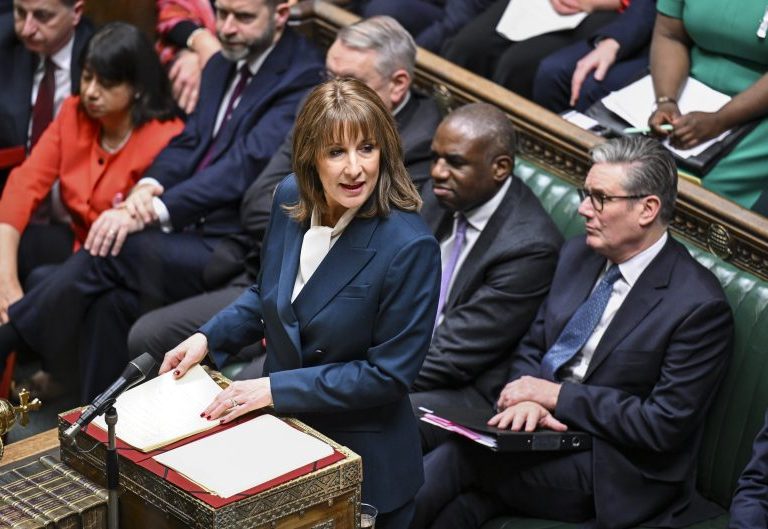
Chancellor Rachel Reeves delivered the UK Government’s Spring Statement 2025 on 26 March, outlining updated economic forecasts, spending plans, and policy reforms aimed at strengthening public finances while supporting long-term growth.
According to the Office for Budget Responsibility (OBR), UK economic growth for 2025 has been revised down from 2.0% to 1.0%, reflecting ongoing global uncertainty, rising inflation pressures, and weaker business investment. However, growth forecasts for later years have been slightly improved, supported by lower energy prices, planning reforms, and increased construction activity.
The Spring Statement focuses heavily on maintaining the Government’s fiscal rules. To achieve this, the Chancellor announced a combination of spending adjustments, welfare reforms, defence investment, and measures to reduce tax avoidance.
Key Measures Announced
Welfare Reforms
The Government announced significant changes to welfare spending, including reforms to disability-related benefits and Universal Credit. These measures are expected to reduce welfare spending by around £4.8 billion by 2029/30, while increasing support for employment-focused programmes.
Increased Defence Spending
An additional £2.2 billion will be allocated to defence in 2025/26 as part of the Government’s commitment to increase defence spending to 2.5% of GDP by 2027. Funding will partly come from reductions in overseas aid spending.
Housing and Construction Investment
The Spring Statement includes:
- £2 billion for new social and affordable housing projects
- £625 million investment in construction skills and workforce training
- Support for planning reforms designed to boost housebuilding and infrastructure development
Tackling Tax Avoidance
The Government also announced measures to close the tax gap through increased HMRC enforcement, stronger debt recovery systems, and higher penalties for late tax payments. These measures are expected to raise up to £1 billion annually by the end of the forecast period.
Economic Outlook
The OBR forecasts inflation to peak at 3.8% during 2025 before gradually returning to the Bank of England’s 2% target in 2026. Unemployment is expected to rise slightly to 4.5% before easing in later years.
Despite economic pressures, the Government says the Spring Statement aims to balance fiscal responsibility with investment in defence, housing, public services, and long-term economic growth.
The next major fiscal event will be the Government’s Spending Review, expected in June 2025, which will provide further detail on departmental budgets and future public spending plans.
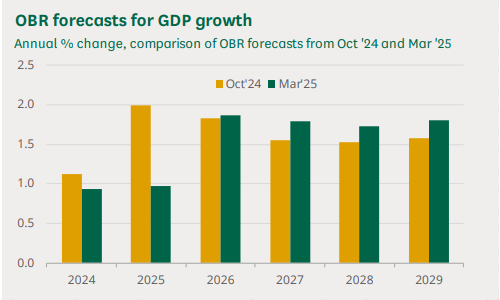
Source: OBR, Economic and fiscal outlook – March 2025, 26 March 2025, Table A.1